Category: The Star Container

  • your imperfect offering

    your imperfect offering

    When people ask me what my hobbies are I say reading but the truth is, I usually spend way more time watching TV than reading books. And every once in a while, I re-watch a show I really love. This summer, it was Ramy, written by American stand-up comedian, writer and actor Ramy Youssef. The show, which aired on Hulu between 2019-2022, has won numerous awards for its frank and nuanced portrayal of American Muslim identities, and the laugh-out-loud funny way it examines questions of faith and desire.

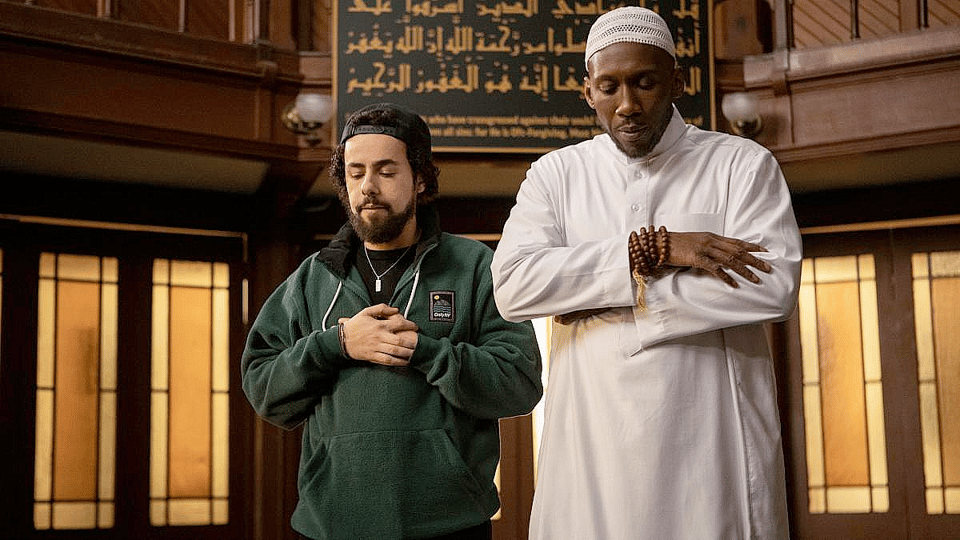
    In season two, the main character Ramy (played by Ramy Youssef) goes wandering late one night on a stretch of disused train tracks in New Jersey together with his Sufi Sheikh (played by Mahershala Ali). They are looking for the dog of a man who went to prison that same day, hoping to save the animal. They’ve been looking for hours, with no luck. Over and over, Ramy flops his arms and suggests abandoning the search; it’s dark and cold and the dog could be anywhere. The dog could be dead already. Suddenly, Ramy’s phone dings with a prayer notification.

    Let’s make Isha*, the sheikh says, stopping in the middle of the quiet train tracks.

    Ramy hesitates. But we don’t have a mat, he says, how should we –

    The sheikh doesn’t reply but takes off his scarf instead and calmly places it on the leaf-covered ground next to the tracks.

    Okay see the thing is, Ramy says, I don’t have any water to make wudu**, and also I farted back there when we were walking so I don’t even have wudu ‘cause of the fart.

    The sheikh looks at him and says: You look at everything as either a blessing or a curse, Ramy. The truth is everything is both.

    And so they pray, on that cold, deserted patch of earth in New Jersey. And then they find the dog, of course. 

    Before you start wondering why I’m devoting an entire newsletter to a scene in a TV show where two Muslim men talk about farts and then pray together, let me say: I don’t think this scene is only about prayer. To me, it’s about all the small and large moments in our lives where we are asked to make an imperfect offering in order to follow our values and our love for something. Be it God, our child, or an artistic calling.

    If, say, creativity is one of my dearly held values but I’m only doing creative work when the conditions are absolutely right and I know I won’t fail, then my value might as well not exist. The older I get, the more I believe that everything valuable in my life – everything that is saturated with my love – is also what’s messy and imperfect. I often come to the page when I’m tired, when I think there’s nothing to say. I’m so unprepared for this, I think, every single time.

    But what if this kind of imperfect offering is one of the best things we can give to each other, to ourselves?

    What if lowering the bar would allow us to follow our values more often, not less?

    There’s a New Moon in Virgo happening this week, on August 23. If there’s a sign in the zodiac concerned with perfection, it is surely Virgo. And yet, Virgo also understands the power of a concrete action. Or, as a good friend of mine once printed on a handkerchief: Do small things with great love.

    What do you love? Whom do you love? What would be the smallest step you could take to express your commitment? We’re not used to include ourselves in these questions, so I want to make it explicit: if you could offer yourself something, a concrete action that would affirm your values or your deeply held beliefs, what would it be? Whatever it is, let it be imperfect. Let your hands get sweaty. Let the world meet you that way.


    *Isha is the fifth prayer of the day in Islam, occurring after nightfall.

    **Islamic procedure of ritual purification before prayer. Wudu entails washing the hands, rinsing the mouth and nose, washing the face and forearms, then the head and the ears and finally the feet, cleaning the space between each toe with water.


    This is an essay from my newsletter The Star Container, first published in August 2025. Subscribe or head to the archive here.
  • the antidote to vigilance

    the antidote to vigilance

    When was the last time you felt tender? Maybe it was a small moment. A word that got stuck in your throat, an old grief showing up. Or maybe it was beauty rather than sadness, the way the moss between the trees shimmers after rain.

    I can’t stop thinking about tenderness lately, although, most days I won’t let myself feel it. It seems too risky, too impossible. Better to keep the armour up, even though its growing heavy around my shoulders.

    I wondered how I might find my way back and started how I always start: small. For the last three weeks, I wrote down moments that felt tender to me, that made me soft inside. Moments where I dropped my vigilance, my cynicism. Things like:

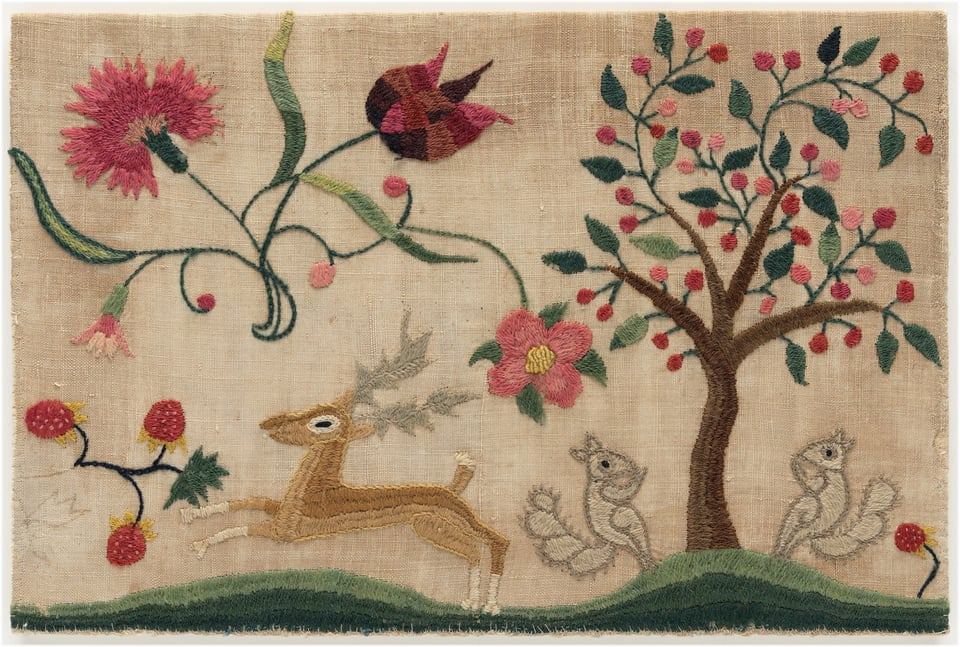
    The deer in the forest the other day, further up the path, about to disappear into the undergrowth

    The dog’s soft paws kicking against me in the night as she sleeps

    The green spiky leaves of the holly bush, quietly moving in the wind

    My two-year old nephew waking up from his afternoon nap, telling me about a dream he had: ‘You were in it,’ he says. ‘We went to the supermarket, Lena.’ ‘And what did we get,’ I ask. ‘Bread,’ he says, eyes wide open.

    By and by, the moments became a collection of evidence, a cluster of meaning. A way to notice warmth.

    This might sound terribly obvious but what is tender inside us must be held tenderly. I’ve tried for years to discipline and frighten my most vulnerable parts into submission, with no success. Which brings me to another curious feature of tenderness: it seems so intimately tied to failure. For days, I’ve wanted to write this piece here and tried to find the words. I must do it tenderly, I thought, otherwise what’s the point. Reader, I failed. In the last four hours, I wrote three alternative versions of this little essay and told myself they were dumb and deleted them and I didn’t have one kind emotion towards myself the whole time. That is, until about 5pm in the afternoon, when I was finally tender enough to relax a little. To not hold on so tight. To look at my scribbled list of tendernesses again and see what bloomed from there.

    Tenderness cannot be hacked. I don’t think there’s a trick to it that makes it arrive faster. In that way, it resembles grief and joy. There is no shortcut, no timeline. Only our willingness to experience it, tenderly, and to be changed by its touch.

    This is an essay from my newsletter The Star Container, first published in July 2025. Subscribe or head to the archive here.

  • at her pace

    at her pace

    Usually, if I have to decide between two paths in my life, I try to pick the path that scares me more. If one option seems ‘logical’ and ‘makes perfect sense’ and the other gives me a fluttery feeling in my stomach and thoughts of ‘I’m not good enough for this’ or ‘this will never work’, I will, as often as I’m able to, pick the second option. I could give you a few great-sounding reasons for this behavior; I could tell you that I value courage, that I desire being fully alive instead of being fully secure, I could tell you that I like to face my limitations. And yet, it’s also true that I’m terrified of being stuck. It feels a lot like death to me.

    Mystics from every era and faith can tell you that life will eventually defeat you in some way. Usually more than once. It will hand you the thing that feels a lot like death. Sometimes through the loss of people you love, an illness or a break-up. Sometimes, if you’re really unlucky, through everything at once. My defeat this year arrived in the form of being stuck. I had always prided myself on being decisive and here I was, not being able to decide a thing. In early 2025, finished a novel I’d worked on for a decade. After the initial elation, I noticed how much I had expected something to happen after my effort: to me, to the book, to my life. But very little happened, despite my dedicated daily efforts. Instead, I found myself in such dense fog (the fog is a metaphor, mostly) that the entire question of ‘choice’ became a bit of a joke. Choose what? Choose where? I felt burnt out and confused, frustrated and slow. I took a lot of walks, filled various notebooks with scribbles and let my hair grow out.

    I’ve heard people say this sort of directionless fog is quite normal in midlife. I’m turning 39 in two weeks; I guess I’m right on time. In moments when I felt particularly lost, I imagined the ghost of of Swiss psychotherapist Carl Gustav Jung (who had much to say about the two halves of life) in the room with me as I told him about my troubles. He always smiled. I guess he’s been there.

    If I had to locate myself on a map right now, I probably couldn’t do it; there’s still some fog hanging about. But I’m slowly beginning to see that the purpose of all these months of disorientation was not just to mess with my inner compass. The purpose was to re-orient my inner compass. To equip me with a sense of knowing that will carry me past forty. Into all the years I may yet be alive.

    I have this hunch that this new kind of knowing will feel a lot less certain, a lot less righteous, and a lot more like music. Like a strange bird passing overhead, or a slight tremor in the earth after a distant train goes by. A lot more mysterious. Perhaps this is also what Nigerian writer Chinua Achebe talks about in this passage: “The impatient idealist says: ‘Give me a place to stand and I shall move the earth.’ But such a place does not exist. We all have to stand on the earth itself and go with her at her pace.”

    At her pace. To believe that we are the ones setting the pace, that our will can define the shape of things to come, is hubris, Achebe warns us. I think in the first half of our lives we need a dose of this kind of hubris. We get to be impatient idealists. I would certainly count myself as one. That is, until I encountered a situation where my will, along with all my plans for action, was no longer useful. I was asked to move at a different pace. I’d like to think it’s the pace of the earth itself.

    I’m writing about this today because there’s a Full Moon in Capricorn. The sign of the sea goat is, unlike any other, concerned with evolving concrete forms. Capricorn understands and values deep time and, quietly and ambitiously, works to change societal structures. In its most positive expression, it can be a very patient idealist.

    So, maybe you want to reflect on the structures and forms you’ve evolved in your own life, the times where you held steady and didn’t give up. And maybe you also want to reflect on how, at times, life has evolved you; how events or people have changed you deeply, in ways you would not have chosen but are grateful for now.

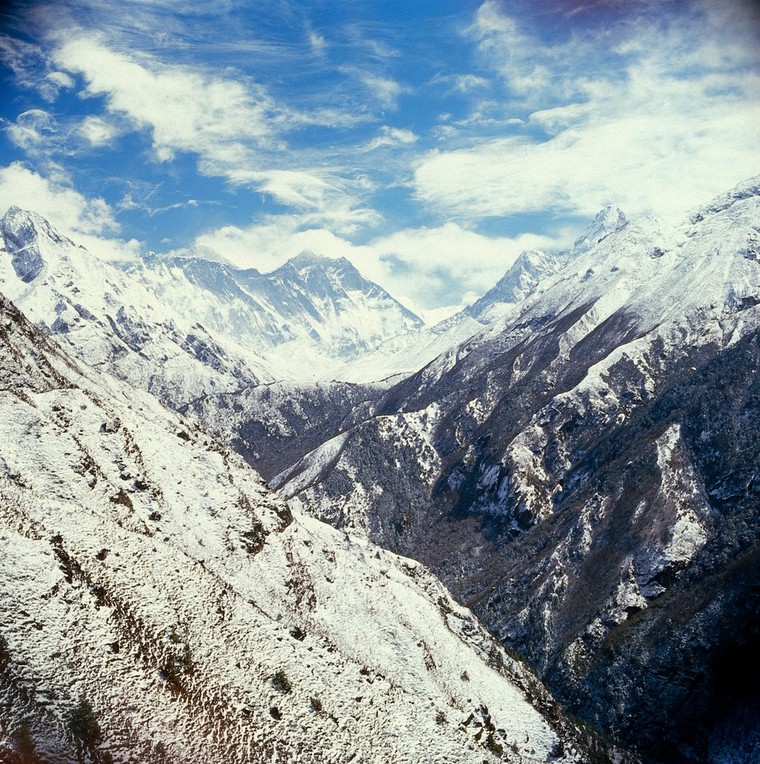
    In short, today is a moment to be grateful for the pace of the earth, the slow forming of mountains. The way they are so indifferent to us but hold us, nonetheless.

    This is an essay from my newsletter The Star Container, first published in July 2025. Subscribe or head to the archive here.