Category: The Star Container

  • the ones who don’t answer you

    the ones who don’t answer you

    A few days ago, I sat in a bright community hall with a view of a bay, surrounded by about forty strangers. I was on Iona, a small island off the west coast of Scotland, listening to the Irish poet Pádraig Ó Tuama talk about survival through the lens of beauty. Every day, he’d read us a poem, say, by Lucille Clifton, or Marie Howe, or Dunya Mikhail and we’d talk about it: how it moved us, the questions it raised. From that, we’d write our own poems, the first scraps. And as the sky outside changed, we began to share what we wrote. Over the span of a few days, we covered it all: death, loss, silence, conflict, heartache. I wouldn’t say it was fun, exactly. But there’s something to be said for being in community with a group of kind-hearted people and talk about the things that really matter, the things that gnaw at your soul.

    On the morning of our fourth day together, Pádraig stood in the same sunlit spot he had stood in all week and gave us another sharp question:

    Who in your life doesn’t answer you?

    The day’s topic was ‘Desire’ and here we were, being thrown right into it. We were asked to ponder our one-way streets, those we have with the living and the dead and our pets and god and maybe famous people. I thought about writers I admire and the imaginary conversations I have with them. I thought about former lovers, things left unsaid. I thought about teachers, mentors, people I haven’t seen in years. And soon, my head was filled with both the feeling of want and the feeling of shame, and rejection. That awful sensation when you send a message to someone you really like and they leave you on read, forever.

    We were instructed to choose one person from our desire-list and write them a series of postcards. We were instructed to be confident and honest. Strangely, doing this made the desire easier to bear. Here are some postcards I wrote to a meditation teacher I found online a few years ago. We’ve never met. I talk to her all the time in my head. I’ll call her ‘Josephine’.

    Josephine,

    Is it ok that I’m still

    at the very beginning?

    The pages gather dust.

    Josephine,

    I haven’t meditated for three days.

    I don’t even miss it.

    Instead, I think about visiting you

    in the countryside.

    Would you roll me a cigarette if I came by?

    Doing this exercise starts to reveal how complicated our desires are: How we feel helpless and frustrated and lonely within them. But they also contain life, no?

    Maybe you’d like to write your own series of postcards (that you never need to send, of course) and find out what it is you really yearn for. Or even just think about that question above.

    We are in the middle of a Venus retrograde in Aries. It started on March 1 and will end on April 12, 2025. If ever there is a time to examine our desires and to let ourselves be drawn to the person or place or thing we really want, it’s a Venus retrograde. The planet of intimacy and values only does this every 18 months, and not always in the same sign. The last time Venus went retrograde in Aries (and Pisces) was eight years ago, between March 4th and April 15th, 2017. If you like, check your email archive or diary to see what came up for you then. What did you learn about intimacy, your values and beauty at the time?

    Because much of it happens in the sign of Aries, this 2025 Venus retrograde is not subtle, like some of the other ones. Aries-energy is impulsive, confrontational, childlike and obvious. It’s also deeply courageous. If you find yourself gripped by strange new impulses, if you notice an instinct to upset the status quo, I say follow it with your whole heart. Speak the unacceptable words. Be the weirdo you were born to be. Because Desire, the deep one, the one you feel vulnerable and ashamed about, is no frivolous thing – it is the potent place of all we want to make manifest with our love. Venus retrograde is here to remind us of that.

    This is an essay from my newsletter The Star Container, first published in March 2025. Subscribe or head to the archive here.
  • the snail’s deserted house

    the snail’s deserted house

    There’s a persistent idea that astrology can be used to predict the future. But astrology is stranger than that, weirder: in my calmer moments, it comes alive in my hands not as a crystal ball but as a living, breathing system of wisdom. Like I can put headphones on and listen to the universe doing its terrible, magnificent unfolding.

    And so, when I think about a current or upcoming planetary transit, I ask myself what unfolds, what calls, and how we might answer. The month of March has a loud, impatient sound to it. There’s an intensity and urgency in the air, a feeling of things ‘not being right’, and a desire and an inability to fix them, especially when it comes to our relationships, values, body image and communication. It’s all quite in-your-face. And in some ways I think this coming month gives us a chance to practice for the years ahead. Because this sense of urgency and doom within us – and in the world at large – will not go away. How could it?

    My question at this point is how do we live inside that. What calls us underneath the chaos, the blinking red light, the fear? I think it might be slowness. The slowness I mean is related to being uncertain, to taking our sweet time with an answer, to resting, to saying no, to saying ‘not yet’, to honouring the hours of our precious lives, to embracing our age, our frail bodies. To stop for a minute. To expand the minute like a rubber band. To go beyond the tyranny of clocks.

    There’s a kind of slowness that’s packaged and sold to us as ‘relaxation’, ‘leisure’ or ‘self care’. It’s function is to keep us functioning. But for whom? Instead, in the kinds of crisis times we live in, slowness can be a powerful portal for new visions of justice. Three mystics who have been saying this for decades are performance artist-prophet Tricia Hersey and her Nap Ministry, the late Reverend Barbara Holmes from the Center for Action & Contemplation and poet-philosopher Bayo Akomolafe. It’s no accident that three of the wisest and fiercest advocates for slowing down are Black; all of them, in their unique ways, draw a connection between the oppressive, violent systems we inhabit and our collective inability – or refusal – to slow down. In her book ‘Race and the Cosmos’, Barbara Holmes writes: ‘I agree that the social situation is urgent, but frantic responses to resilient problems will not solve anything.’

    It’s a shame because I used to really love my frantic responses. They felt like I was ‘doing something’ while slowing down just felt like ‘giving up’. Bayo Akomolafe has me reconsidering this:

    ‘To ‘slow down’ … seems like the wrong thing to do when there’s fire on the mountain. But here’s the point: in ‘hurrying up’ all the time, we often lose sight of the abundance of resources that might help us meet today’s most challenging crises. We rush through the same patterns we are used to. Of course, there isn’t a single way to respond to a crisis; there is no universally correct way. However, the call to slow down works to bring us face to face with the invisible, the hidden, the unremarked, the yet-to-be-resolved…. It is about staying in the places that are haunted.’

    Slowing down is often seen as a cowardly move, a passive position, but Bakomolafe shows us there can be an edge in slowing down. It takes courage. Because when we risk slowness, we start seeing and feeling what we’ve previously ignored. Slowing down, he says, is about ‘questioning our questions’. In this way, slowing down becomes not the opposite of urgency but a deeper, more radical form of it.

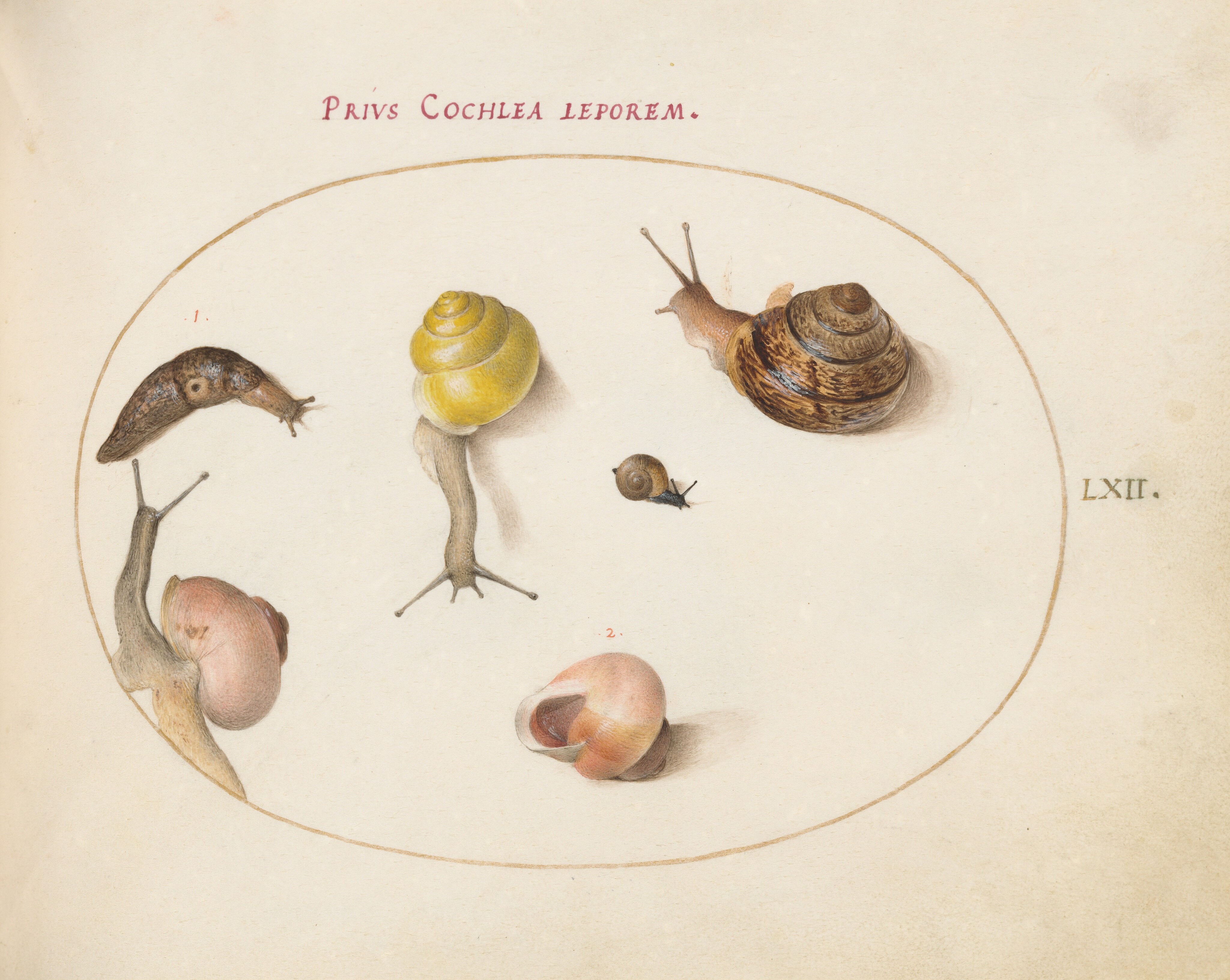
    I admit, I’m no good with slowness. I’ve spent the better part of this month trying to go slower, as though I was waiting for permission, and the permission never came. I felt as though I needed to ‘prepare’ for slowness, to be in a certain state of mind, figure out my entire life first and clear my inbox and forgive everyone who ever hurt me. That sort of thing. But when I really think about the slow moments of February, none of them are grand, and all of them are, in their own way, majestic. Running my tired fingers along a snail’s deserted house. Standing at the window late in the day and watching the subtle change of the light. Entering the present, full of grief, without a single ‘solution’ or ‘plan’ in sight. Letting it be. Letting the needle move, inch by inch, from control to faith.

    Sources

    The above quote is from Bayo Akomolafe’s timely essay ‘A Slower Urgency’. All the other writing on his website is wonderful too.

    ‘Race and the Cosmos’(CAC Publishing, 2020) by Rev Dr. Barbara Holmes is a a great book. So are her most recent thoughts on ‘Crisis Contemplation’.

    Slowness and Rest are not the same but related. Tricia Hersey’s work and her book ‘Rest is Resistance’ (Aster, 2022) illuminates grind culture’s links to chattel slavery and argues for rest as a radical portal for revolution and resistance for everyone.

    This is an essay from my newsletter The Star Container, first published in February 2025. Subscribe or head to the archive here.

  • a coat that fits

    a coat that fits

    You could say we live in dangerous, revolutionary times, and I’d agree. I’m an astrologer and a writer; I see meaning in the movements of the planets and try to find language for what I see.

    Ever since dwarf planet Pluto moved into Aquarius last November, but even more so in recent weeks, I started to think about power again. My own and other people’s. The power of a collective. The way that the word itself is so slippery and, at least in my mind, inspires caution: damp fingertips hovering near a wall socket. A river, fat with fresh rain, tearing through the landscape. Power has an untameable core, which begs the question: what place do we give it in our lives? What shape? The death-dealing faces of power are all around us. But what does life-giving power look like? A power that is self-directed but not self-interested? A power tuned to liberation instead of oppression?

    As I thought about this, I pulled J. Ruth Gendler’s The Book of Qualities down from the shelf. It came out over forty years ago but you wouldn’t know it. In that one slim book, Gendler poetically describes 84 different emotional experiences such as Doubt, Trust or Ecstasy. Here’s her entry on Power:

    ‘Power made me a coat. For a long time I kept it in the back of my closet. I didn’t like to wear it much, but I always took good care of it. When I first started wearing it again, it smelled like mothballs. As I wore it more, it started fitting better, and stopped smelling like mothballs.

    I was afraid if I wore the coat too much someone would want to take it or else I would accidentally leave it in the dojo dressing room. But it has my name on the label now, and it doesn’t really fit anyone else. When people ask me where I found such a becoming garment, I tell them about the tailor, Power, who knows how to make coats that you grow into. First, you must find the courage to approach him and ask him to make your coat. Then, you must find the patience inside yourself to wear the coat until it fits.’

    What strikes me about Gendler’s vision of personal power is the subtlety: The tailor’s coat is a gift. You cannot buy it. It’s a piece of power but not the whole, raw thing. It’s as much as you can safely handle and the shape is as individual as your fingerprint (‘it has my name on the label now’). Whether your power is deeply quiet or loud and fierce doesn’t matter. It’s yours.

    I first read those words about ten years ago, in my late twenties. I had not yet found the courage to approach the tailor. But I thought that, perhaps, if I found a way to avoid any further grand mistakes in my life, I’d finally qualify for a coat and wear it proudly. It wasn’t so. I turned thirty, then thirty-five, I made more mistakes, I failed and I fucked up and Power made me a coat, despite all my flaws. And I started wearing it, awkwardly. I started to claim my power, awkwardly. It was confusing at first: I had spent so many years trying, and failing, to ‘be better’, to control things and engineer perfection because I thought that would give me access to my power.

    But as my coat started to settle on my shoulders it slowly hit me that power, the kind you have to grow into, is not about control at all. It is about being rooted in a fluid, bright place within yourself. From that place you can face reality, which is the one thing that will bring each and every one of us to our knees. But we can rise in it, too.

    This is an essay from my newsletter The Star Container, first published in February 2025. Subscribe or head to the archive here.