Tag: surrender

  • the still field

    the still field

    I’ve recently found that the cramped space of a single line or paragraph is starting to paralyze me. I’d like to, if only for a moment, express everything I am feeling and thinking. The whole end-times-fear-and-joy-and-speed of it all. Do you feel that too?

    It almost makes me want to give up words and take up painting, or music. And then I remember that painters and composers have the same raw deal: there comes a point where you must surrender and begin, maybe just with one note, one brushstroke, and you build your piece from there. If you listen quietly, if you stay with it, if you eventually get out of the way, you can give a shape to something that didn’t have a shape before and let the world have it.

    I struggle with most of these aspects of making art: I like to listen to my unformed writing by offering ‘helpful tips’ and asking premature questions about its meaning, I like to stay with it for twenty seconds and then watch six hours of ‘The Pitt’, and I don’t like to get out of the way. I like being in the way of my books and poems, for years, like a craggy boulder in a Zen garden.

    And yet, within the struggle, there’s a field I sometimes reach. I call it the still field. On the still field, I find the words. It turns out they have been waiting there for a long time, patiently. And it turns out the only thing needed for me to receive them is being who I already am. Experiencing the still field has very little to do with ‘doing’ anything, but of course I forget that every time.

    I simultaneously give parts of myself to this field, and I am fed by it, often in mysterious ways. And I am quite sure that people who are less controlling than I reach this place far more often. Nonetheless, the still field is for everyone: all the neurotic bunnies (I see you!), the intense types, the wild ones and the shy ones. Your art waits for you there, ready to be gathered up and carried over into this world, right into the glitching present.

    There’s a New Moon in Pisces today, one of the first untroubled lunations in Pisces we’ve had in a while. It is followed, just two days later, by the Spring Equinox. It’s a bit like a dusted lens being cleaned, this combo. And you might, for the first time in weeks, have a much easier time arriving at the still field. It helps, too, that Mercury will station direct on Friday and thus perhaps cause a little less travel chaos, brain fog, misunderstandings and mixed-up files than it did in the last three weeks. None of this, of course, means that things will be normal again, or even easy. It’s just not that kind of time right now.

    ‘I have decided to detach from all the terrible news’, people tell me. Others describe the utter exhaustion of trying to ‘stay engaged’. To be honest, I don’t think either option works. And I believe this New Moon invites us to leave this worn-out binary of detachment/engagement behind. Not by denying the suffering that exists in the world and inside us, but by being with it in new, unfamiliar ways. It makes me think of a passage from the book ‘Braiding Sweetgrass’ by the Potawatomi botanist Robin Wall Kimmerer:

    “Even a wounded world is feeding us. Even a wounded world holds us, giving us moments of wonder and joy. I choose joy over despair. Not because I have my head in the sand, but because joy is what the earth gives me daily and I must return the gift.”

    Let the world hold you, then. Surrender, just a little. Let yourself be fed by its wonder, even though none of your questions have yet been answered. Risk delight. Remember that you are brave.

    Sources

    ‘Braiding Sweetgrass: Indigenous Wisdom, Scientific Knowledge and the Teachings of Plants’ by Robin Wall Kimmerer. Penguin Books, 2020.


    This is an essay from my newsletter The Star Container, first published in March 2026. Subscribe or head to the archive here.
  • the antidote to vigilance

    the antidote to vigilance

    When was the last time you felt tender? Maybe it was a small moment. A word that got stuck in your throat, an old grief showing up. Or maybe it was beauty rather than sadness, the way the moss between the trees shimmers after rain.

    I can’t stop thinking about tenderness lately, although, most days I won’t let myself feel it. It seems too risky, too impossible. Better to keep the armour up, even though its growing heavy around my shoulders.

    I wondered how I might find my way back and started how I always start: small. For the last three weeks, I wrote down moments that felt tender to me, that made me soft inside. Moments where I dropped my vigilance, my cynicism. Things like:

    The deer in the forest the other day, further up the path, about to disappear into the undergrowth

    The dog’s soft paws kicking against me in the night as she sleeps

    The green spiky leaves of the holly bush, quietly moving in the wind

    My two-year old nephew waking up from his afternoon nap, telling me about a dream he had: ‘You were in it,’ he says. ‘We went to the supermarket, Lena.’ ‘And what did we get,’ I ask. ‘Bread,’ he says, eyes wide open.

    By and by, the moments became a collection of evidence, a cluster of meaning. A way to notice warmth.

    This might sound terribly obvious but what is tender inside us must be held tenderly. I’ve tried for years to discipline and frighten my most vulnerable parts into submission, with no success. Which brings me to another curious feature of tenderness: it seems so intimately tied to failure. For days, I’ve wanted to write this piece here and tried to find the words. I must do it tenderly, I thought, otherwise what’s the point. Reader, I failed. In the last four hours, I wrote three alternative versions of this little essay and told myself they were dumb and deleted them and I didn’t have one kind emotion towards myself the whole time. That is, until about 5pm in the afternoon, when I was finally tender enough to relax a little. To not hold on so tight. To look at my scribbled list of tendernesses again and see what bloomed from there.

    Tenderness cannot be hacked. I don’t think there’s a trick to it that makes it arrive faster. In that way, it resembles grief and joy. There is no shortcut, no timeline. Only our willingness to experience it, tenderly, and to be changed by its touch.

    This is an essay from my newsletter The Star Container, first published in July 2025. Subscribe or head to the archive here.

  • the snail’s deserted house

    the snail’s deserted house

    There’s a persistent idea that astrology can be used to predict the future. But astrology is stranger than that, weirder: in my calmer moments, it comes alive in my hands not as a crystal ball but as a living, breathing system of wisdom. Like I can put headphones on and listen to the universe doing its terrible, magnificent unfolding.

    And so, when I think about a current or upcoming planetary transit, I ask myself what unfolds, what calls, and how we might answer. The month of March has a loud, impatient sound to it. There’s an intensity and urgency in the air, a feeling of things ‘not being right’, and a desire and an inability to fix them, especially when it comes to our relationships, values, body image and communication. It’s all quite in-your-face. And in some ways I think this coming month gives us a chance to practice for the years ahead. Because this sense of urgency and doom within us – and in the world at large – will not go away. How could it?

    My question at this point is how do we live inside that. What calls us underneath the chaos, the blinking red light, the fear? I think it might be slowness. The slowness I mean is related to being uncertain, to taking our sweet time with an answer, to resting, to saying no, to saying ‘not yet’, to honouring the hours of our precious lives, to embracing our age, our frail bodies. To stop for a minute. To expand the minute like a rubber band. To go beyond the tyranny of clocks.

    There’s a kind of slowness that’s packaged and sold to us as ‘relaxation’, ‘leisure’ or ‘self care’. It’s function is to keep us functioning. But for whom? Instead, in the kinds of crisis times we live in, slowness can be a powerful portal for new visions of justice. Three mystics who have been saying this for decades are performance artist-prophet Tricia Hersey and her Nap Ministry, the late Reverend Barbara Holmes from the Center for Action & Contemplation and poet-philosopher Bayo Akomolafe. It’s no accident that three of the wisest and fiercest advocates for slowing down are Black; all of them, in their unique ways, draw a connection between the oppressive, violent systems we inhabit and our collective inability – or refusal – to slow down. In her book ‘Race and the Cosmos’, Barbara Holmes writes: ‘I agree that the social situation is urgent, but frantic responses to resilient problems will not solve anything.’

    It’s a shame because I used to really love my frantic responses. They felt like I was ‘doing something’ while slowing down just felt like ‘giving up’. Bayo Akomolafe has me reconsidering this:

    ‘To ‘slow down’ … seems like the wrong thing to do when there’s fire on the mountain. But here’s the point: in ‘hurrying up’ all the time, we often lose sight of the abundance of resources that might help us meet today’s most challenging crises. We rush through the same patterns we are used to. Of course, there isn’t a single way to respond to a crisis; there is no universally correct way. However, the call to slow down works to bring us face to face with the invisible, the hidden, the unremarked, the yet-to-be-resolved…. It is about staying in the places that are haunted.’

    Slowing down is often seen as a cowardly move, a passive position, but Bakomolafe shows us there can be an edge in slowing down. It takes courage. Because when we risk slowness, we start seeing and feeling what we’ve previously ignored. Slowing down, he says, is about ‘questioning our questions’. In this way, slowing down becomes not the opposite of urgency but a deeper, more radical form of it.

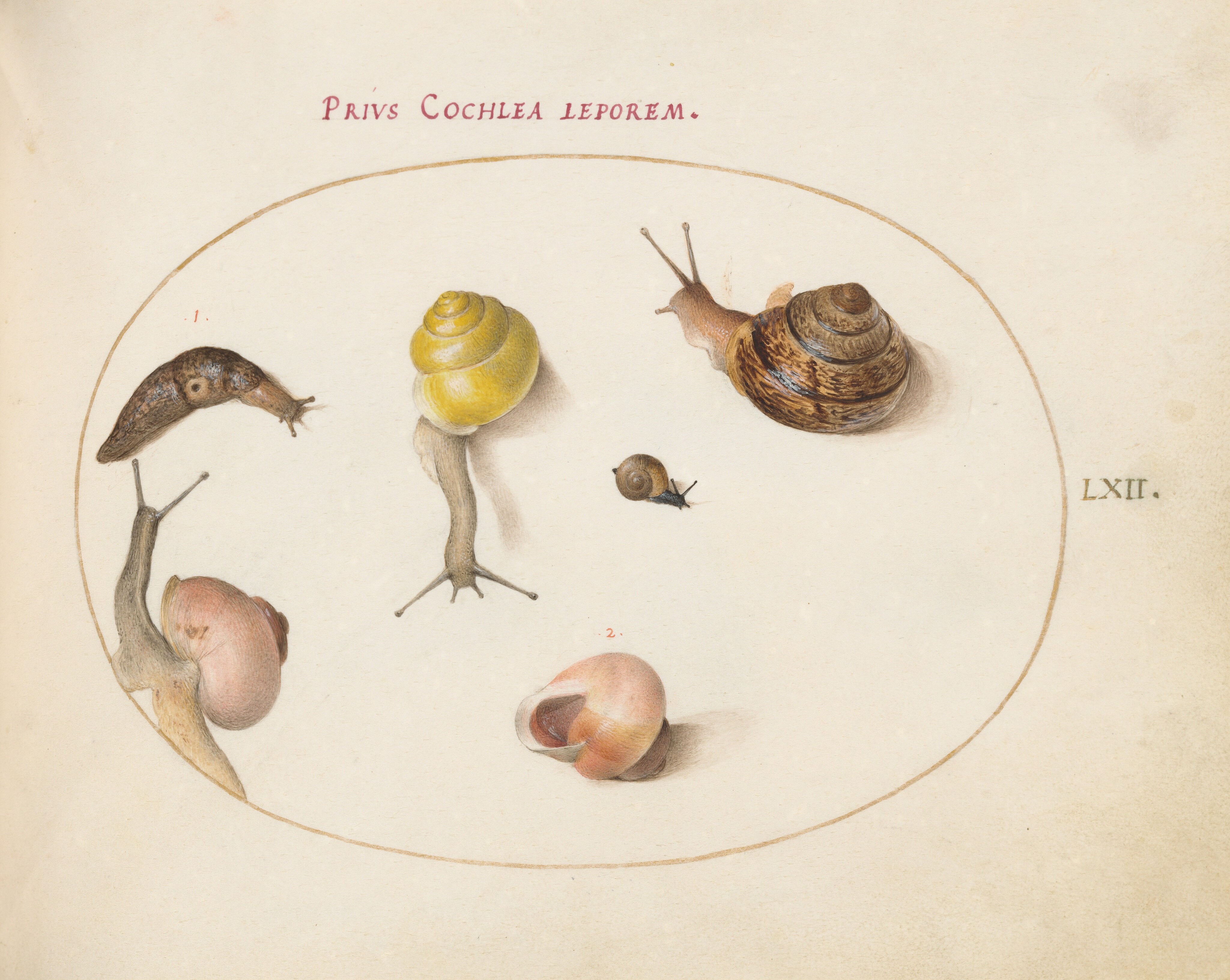
    I admit, I’m no good with slowness. I’ve spent the better part of this month trying to go slower, as though I was waiting for permission, and the permission never came. I felt as though I needed to ‘prepare’ for slowness, to be in a certain state of mind, figure out my entire life first and clear my inbox and forgive everyone who ever hurt me. That sort of thing. But when I really think about the slow moments of February, none of them are grand, and all of them are, in their own way, majestic. Running my tired fingers along a snail’s deserted house. Standing at the window late in the day and watching the subtle change of the light. Entering the present, full of grief, without a single ‘solution’ or ‘plan’ in sight. Letting it be. Letting the needle move, inch by inch, from control to faith.

    Sources

    The above quote is from Bayo Akomolafe’s timely essay ‘A Slower Urgency’. All the other writing on his website is wonderful too.

    ‘Race and the Cosmos’(CAC Publishing, 2020) by Rev Dr. Barbara Holmes is a a great book. So are her most recent thoughts on ‘Crisis Contemplation’.

    Slowness and Rest are not the same but related. Tricia Hersey’s work and her book ‘Rest is Resistance’ (Aster, 2022) illuminates grind culture’s links to chattel slavery and argues for rest as a radical portal for revolution and resistance for everyone.

    This is an essay from my newsletter The Star Container, first published in February 2025. Subscribe or head to the archive here.