Tag: creating

  • the antidote to vigilance

    the antidote to vigilance

    When was the last time you felt tender? Maybe it was a small moment. A word that got stuck in your throat, an old grief showing up. Or maybe it was beauty rather than sadness, the way the moss between the trees shimmers after rain.

    I can’t stop thinking about tenderness lately, although, most days I won’t let myself feel it. It seems too risky, too impossible. Better to keep the armour up, even though its growing heavy around my shoulders.

    I wondered how I might find my way back and started how I always start: small. For the last three weeks, I wrote down moments that felt tender to me, that made me soft inside. Moments where I dropped my vigilance, my cynicism. Things like:

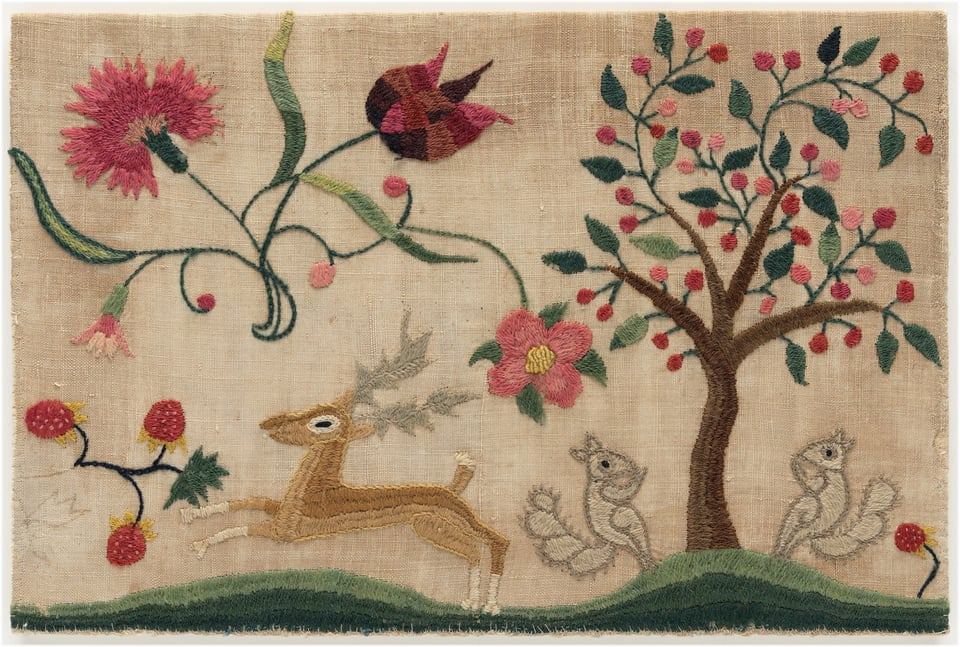
    The deer in the forest the other day, further up the path, about to disappear into the undergrowth

    The dog’s soft paws kicking against me in the night as she sleeps

    The green spiky leaves of the holly bush, quietly moving in the wind

    My two-year old nephew waking up from his afternoon nap, telling me about a dream he had: ‘You were in it,’ he says. ‘We went to the supermarket, Lena.’ ‘And what did we get,’ I ask. ‘Bread,’ he says, eyes wide open.

    By and by, the moments became a collection of evidence, a cluster of meaning. A way to notice warmth.

    This might sound terribly obvious but what is tender inside us must be held tenderly. I’ve tried for years to discipline and frighten my most vulnerable parts into submission, with no success. Which brings me to another curious feature of tenderness: it seems so intimately tied to failure. For days, I’ve wanted to write this piece here and tried to find the words. I must do it tenderly, I thought, otherwise what’s the point. Reader, I failed. In the last four hours, I wrote three alternative versions of this little essay and told myself they were dumb and deleted them and I didn’t have one kind emotion towards myself the whole time. That is, until about 5pm in the afternoon, when I was finally tender enough to relax a little. To not hold on so tight. To look at my scribbled list of tendernesses again and see what bloomed from there.

    Tenderness cannot be hacked. I don’t think there’s a trick to it that makes it arrive faster. In that way, it resembles grief and joy. There is no shortcut, no timeline. Only our willingness to experience it, tenderly, and to be changed by its touch.

    This is an essay from my newsletter The Star Container, first published in July 2025. Subscribe or head to the archive here.
  • accepting the unacceptable

    accepting the unacceptable

    For a long time, I misunderstood the nature of acceptance. I believed it implied consent, that, if I accepted something, I was automatically saying it’s okay.

    I don’t believe that anymore. I think acceptance can be a powerful doorway to change, if we let it. I say this as the people of Palestine are being slaughtered and famished by the State of Israel. So many have died already without even the dignity of a burial. So many might never be found underneath the rubble of Gaza.

    For a long time, I couldn’t accept that I now belong to a generation of people who are watching a genocide on live TV. No no no, I kept thinking, all the while remembering that the Srebrenica massacre or the genocide against the Tutsi in Rwanda also happened before an international audience, with no intervention to stop the unimaginable violence.

    So, I’ve been trying, day after day, to accept the unacceptable.

    There is something inside acceptance that is intimately tied to leaving behind naïve ideas of good and evil. We are asked to make a leap and say, yes, humans truly are capable of such acts. I wish it weren’t so, but it is. I’m human too. Where does that leave me?

    I want to say: it leaves me resisting. It leaves me a fiercer advocate for peace and liberation. It leaves me tender and often frightened. I want to say: there are perhaps no words yet for where it leaves me, where it leaves all of us.

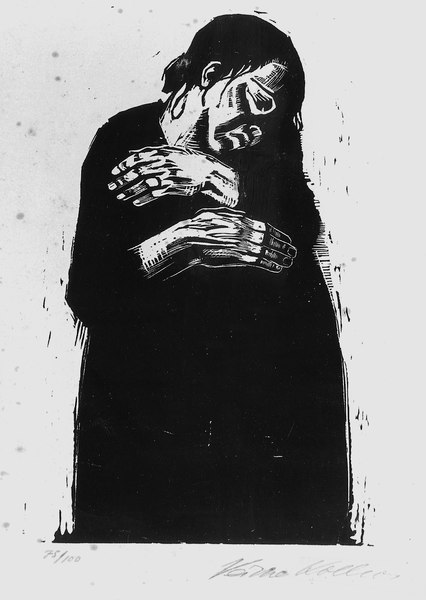
    I’ve chosen a woodcut from German artist Käthe Kollwitz (1867 -1945) to illustrate all this because she expresses this pain of being human so well. Kollwitz’ own son, Peter, didn’t survive the battlefields of World War I. Despite this loss, Kollwitz didn’t join in the growing pro-war movement forming in Germany in the early 1920s. Instead, using the visual language from war-propaganda, she created a series of anti-war posters. A woodcut to say: remember how fragile we are. In the years to come, Kollwitz would witness Germany’s plunge into fascism and the start of another World War. She couldn’t stop those horrors. But in her careful black lines we see a woman’s raw grief, something no blind desire for revenge or fascist regime can ever touch. We see an artist say I am paying attention.

    Today, there is a Full Moon in Scorpio. Of all the twelve signs, Scorpio is the one most associated with death and rebirth. And although every full moon brings with it a sense of release, culmination or intensity, if it’s in Scorpio, you cannot miss it. This is a moment of catharsis, letting go. Maybe for you personally, maybe for someone else. It is as good a time as any to practice accepting the unacceptable, to face whatever it is you think you cannot face. Look at it. Let yourself grieve. Let yourself be changed by what you see.

    This is an essay from my newsletter The Star Container, first published in May 2025. Subscribe or head to the archive here.