Lorem Ipsum

The Star Container

  • where strength comes from

    where strength comes from

    Last summer, I talked to my wise friend Pierre. He is very good with Tarot cards and he always makes me laugh when I want to give in to despair. ‘I feel so heavy,’ I said. ‘Why do I feel so heavy?’

    ‘Because you never set anything down, Lena. You just keep picking up more things. You need to put a few things down.’

    It has taken me a few months to understand what he really meant. I began to observe myself. Almost every time I stopped worrying about something for a minute, the peaceful silence made me paranoid: weren’t there more things to worry about? Wasn’t there some piece of news, a thought, or an uncertainty I could reach for to trash my momentary sense of joy?

    I’m sure you played this game a few times, too. And truly, I don’t have any grand fix. But as December begins, I’d like to invite you to make a short list: Write down a few things you are prepared to set down. What are you lugging around with you, secretly, stubbornly? Is it a bag of old guilt? A suitcase full of convictions that leave you parched and isolated?

    It you’re about sixty-five percent ready to set something down, that’s good enough. You might even include some stuff you’re not prepared to set down at all, and see how it feels.

    Here’s my list, for today:

    The unanswered messages on my phone and in my e-mail inbox, and the haunting fear of being seen as careless

    The feeling that I always need to know how something will turn out, and if it fails, it’s all on me

    The belief that I’m only a good person if I bring the same values to every conversation and express them throughout. This one is closely related to the belief that I must never contradict myself, even when doing so actually preserves connection with other people instead of severing it

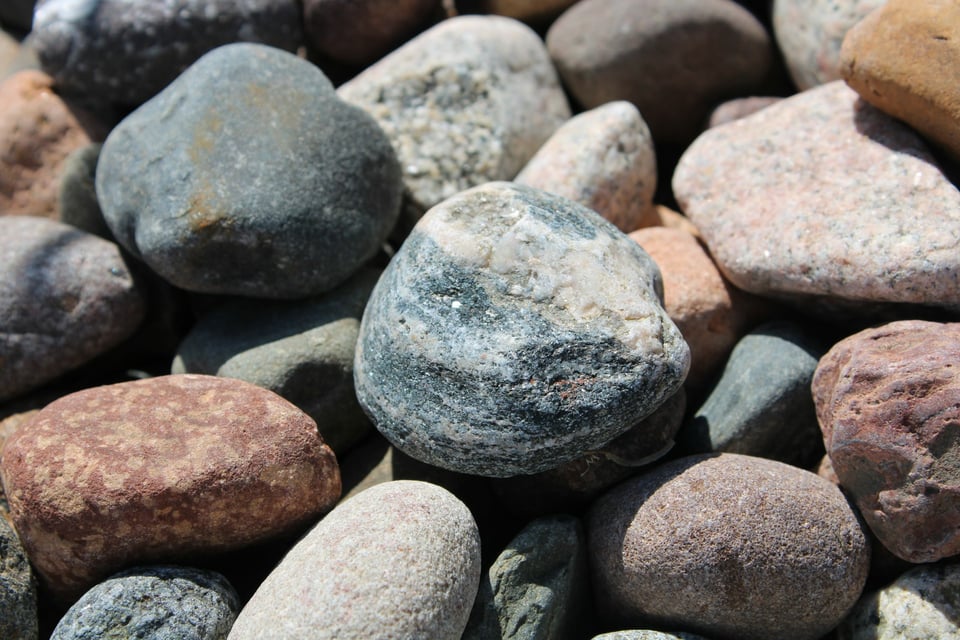
    There is no wrong way to do this list. And once you’re done, you may absolutely burn it on your terrace or balcony and offer it to the gods of your understanding (trees and stones are very much included here). Because what’s the point of setting down a burden if we don’t place that burden at the feet of a greater power?

    The Full Moon in Gemini that happens between Thursday and Friday this week, December 4and 5, is a great moment to introduce more lightness and to use our words. So, if you’d like to try the experiment above, any night from now until Sunday is good.

    Next week on Tuesday, December 9, Mars in Sagittarius will square Saturn in Pisces. According to one of my favourite astrologers, Austin Coppock, this aspect often creates situations where we need to move something heavy (Saturn) really fast (Mars). Like a sudden deadline you had not planned for, or a flu that announces itself on the exact day when you really need to show up for a job. Difficult Mars-Saturn aspects always stress-test our systems and structures, both physical and psychological. Great timing, I know.

    All this to say: Keep your schedule a little open next week, if you can. Don’t try to do too much, because the ‘too much’ will appear all by itself. Don’t overpromise, underpromise.

    I have been writing so much about tenderness this year, and I will continue to do so in 2026. I have a hunch that I will need some strength for the year to come. I think you will, too. And the evidence of my own life has mostly shown me that my strength has not come from endlessly worrying. It has come from joy. And the joy has come from allowing myself to set my burdens down. To let something be.

    As we meet this difficult Mars-Saturn weather next week, one of the best things you can do is setting down a stone or two. Hand them over. Keep your hands free for whatever life may throw at you, be it gold dust, a bit of dirt, or both.


    This is an essay from my newsletter The Star Container, first published in December 2025. Subscribe or head to the archive here.
  • more than enough

    more than enough

    In last month’s newsletter, I wrote that September would require us to discern our truths, our beliefs about ourselves. I called it ‘pruning season’. And what can I say, it certainly had me working overtime.

    After spending the last six months mainly going for walks and being at home, I suddenly spent three to four days a week at the office befriending new colleagues and commuting on a packed train each morning and evening. Alongside that, I also started a one-year counseling course. In short: I met heaps of new people, most of them my age or a bit older, and the more people I met, the more it dawned on me that I was the only one among them who, at thirty-nine, was not yet partnered.

    In these kinds of social situations, people will sometimes try and find out about my relationship status in a circuitous way (‘Do you live alone?’ is a popular question). But in most cases, they don’t ask about my private life at all, which is both respectful of them and brings on a particular loneliness inside me: while their partners and lovers and (sometimes) children come alive in our conversation through my questions, the friends, family members and animals (the dog! Just the dog, really) that are the loves of my life remain at the periphery, unmentioned. It’s almost as if they don’t really count.

    So, as September rolled in with its sudden abundance of small talk, it wasn’t long before I felt a familiar shame creep up, a refrain of haunting questions: What was wrong with me? Why did I choose to live this way? I’m sure plenty of people can relate to this experience. Though my shame is certainly gendered, I think many of us know this painful lack of belonging, this sense that we don’t quite fit with what society has deemed acceptable.

    I want to be careful with proposing a fix at this point, or even a structural analysis. I could certainly recite the slogans (smash the patriarchy! down with heteronormativity!) but if I learned anything this month, it’s that saying the truth out loud is sometimes more than enough. It has a way of freeing you. It has a way of creating a space that wasn’t there before.

    I find that if I peel away other peoples’ pity about my singlehood (often expressed kindly as: ‘I’m sure you’ll find someone’) and my self-pity (often expressed unkindly as: ‘I’ll never find someone’), my vision changes, becomes more expansive. I once again see all the gorgeous humans in my life (and the dog, of course) who love me with such faithfulness and care. I find that it’s ultimately my choice if I want to use these people as proof of my worthiness (see! I am loved!) or if I simply allow myself to be grateful for what they bring me, and what they ask of me. If I peel the layers back further, I begin to see my beautiful sovereignty, and all the things I was able to create because of it. And I also see my longing, shimmering there at the edges: what might I be able to do and create if I entered into a partnership? How might I be asked to change and grow?

    ‘All truth is a paradox,’ the writer Anne Lamott once said. I take this to mean: if we open up the kaleidoscope, if we get curious about ourselves, we discover that several things are always true at once, even if they seemingly oppose each other. It’s very annoying. But also, perhaps, the more I allow for the ‘both/and’ inside myself, the more I am able to imagine other people in their complexity, their contradictions: The way almost everyone harbors both a loneliness and so much hidden beauty. What is yours, I want to ask. What is yours?

    But for now: Are you ready for October? That’s alright, me neither. Just know that, this Wednesday, on October 1st, we have a really sweet square (they exist!) between Mercury in Libra and Jupiter in Cancer. It’s such a good day to notice where you’ve held back or where you played small in your communications, and there’s so much support for speaking your truth in a way that is both generous and caring.

    I hope you try that, even if you only speak a truth out loud to yourself and no one else. Just sit with it for a little while. There’s no rush.

    Further Reading

    ‘All about Love: New Visions’ (Harper, 1999) by writer, theorist and educator bell hooks is a great resource to broaden your perspective on the subject of love, and to think about it both through a personal and a political lens.

    This is an essay from my newsletter The Star Container, first published in September 2025. Subscribe or head to the archive here.

  • pruning season

    pruning season

    When I first walked through my current apartment, on a warm July day five years ago, I noticed an old rose bush outside. It grew in a scraggly shape against the stone wall of the house, its highest buds reaching up to the windowsill of my future bedroom.

    After I moved in, one of my upstairs neighbours, a landscape gardener, showed me how to prune the rose. I learned to pay attention to bud eyes and always count the leaves growing from each stem before deciding where to cut (five, in case you’re wondering). Be ruthless, my neighbour said. The more you cut back the stems, the stronger the plant will become.

    Did I immediately turn this into an allegory for resilience? You bet. I only later learned that if you cut the stems back too much and too often, the plant will get stressed. And if you’re not supporting your rose properly when planting her in a new spot, she’ll go into ‘transplant shock’.

    Apart from that though, roses really are survivors. My crone of a rose – an evergreen Southeast Asian variety – seems to endure both drought and frost with equanimity. Pests and fungi try their luck: every spring, her leaves are tainted with mildew, or the insides of her thickest stems turn brown. When this happens, I cut back as much as I can, until she is all sharp prickles and no blooms.

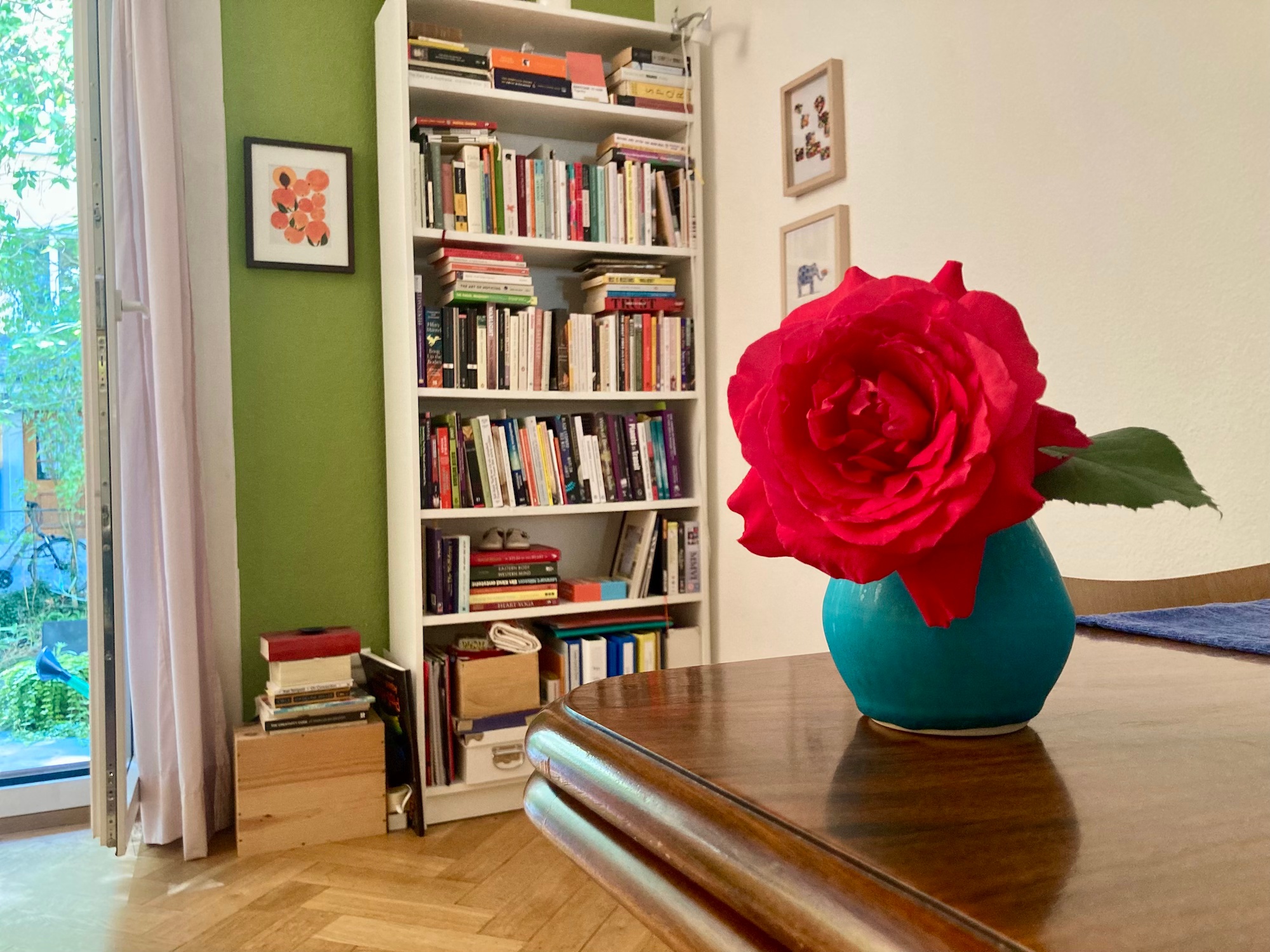
    And each time, about five weeks later, the shrub has doubled in size and a sisterhood of deep red flowers appears, fragrant and delicate.

    As my apartment is once again filled with bouquets and this smell humans have been bottling for millennia, I remember it’s not all for me. The rose would bloom even if I wasn’t here; bumblebees depend on her. And yet, I also feel we have a relationship, she and I. She has taught me about the changing of the seasons, the sacrifices of winter and summer both. She taught me what you can gain if you’re prepared to lose something.

    When I think of the astrology of early September, ‘pruning season’ comes to mind. Or maybe: The Great Letting Go. One seems more intentional, more self-directed than the other but why can’t it be both? This coming Sunday, September 7, we have a Lunar Eclipse in Pisces, which is basically a Full Moon that’s noticeably more intense than all the other Full Moons during the year. If you feel particularly thin-skinned, weepy or just generally exhausted this week, it might well be the Eclipse having its way with you. But and also: this Lunar Eclipse is a moment in the year where you can prune your internal (emotional, mental, spiritual) garden. Perhaps it helps you see, for the first time, a patch of beliefs that always seemed obvious and ‘normal’ to you, a heap of assumptions that were ‘just there’, making you quietly miserable. What might bloom inside you if you carried some of those weeds over to the compost heap?

    As in nature, the new blooms, and the beauty they bring, might not be visible for many weeks or months to come. But trust that, by pruning, you have done the most important part. The rest is just patience. ‘A wild patience’, as poet Adrienne Rich would say.


    Inspiration and further reading

    Alexander Chee’s incredible personal essay The Rosary was heavily on my mind as I wrote the piece above. Much of what I know about roses – and becoming oneself – I learned from that essay.

    This is an essay from my newsletter The Star Container, first published in August 2025. Subscribe or head to the archive here.